TOGETHER Project: Giving refugee children a chance to learn
Every day, many children in Uganda’s refugee settlements struggle to learn without proper classrooms or resources. But hope is returning. Supported by the European Union Humanitarian Aid (ECHO), Finn Church Aid’s Towards Greater Effectiveness and Timely Humanitarian Education Response (TOGETHER) Project is giving refugee and host community children in Kiryandongo and Palorinya a chance to learn, thrive and dream again.
Renewing classrooms, Inspiring futures at Canrom
Nestled within Kiryandongo refugee settlement, Canrom Primary School is becoming a place where children not only learn but also begin to dream again. Over the years, the school has struggled with overcrowded classrooms, teacher shortages, limited materials, and crumbling infrastructure, challenges made worse by a constant influx of refugees from the DRC, South Sudan, and Sudan. On average, Kiryandongo receives over 3,000 new arrivals every month.
According to the 2024 Education Response Plan gap analysis, Canrom Primary School faced severe shortages: 71 classrooms, 25 teachers, desks, and latrines were urgently needed.
Thanks to the TOGETHER Project, the school is now undergoing a much-needed transformation.
Reviving learning spaces
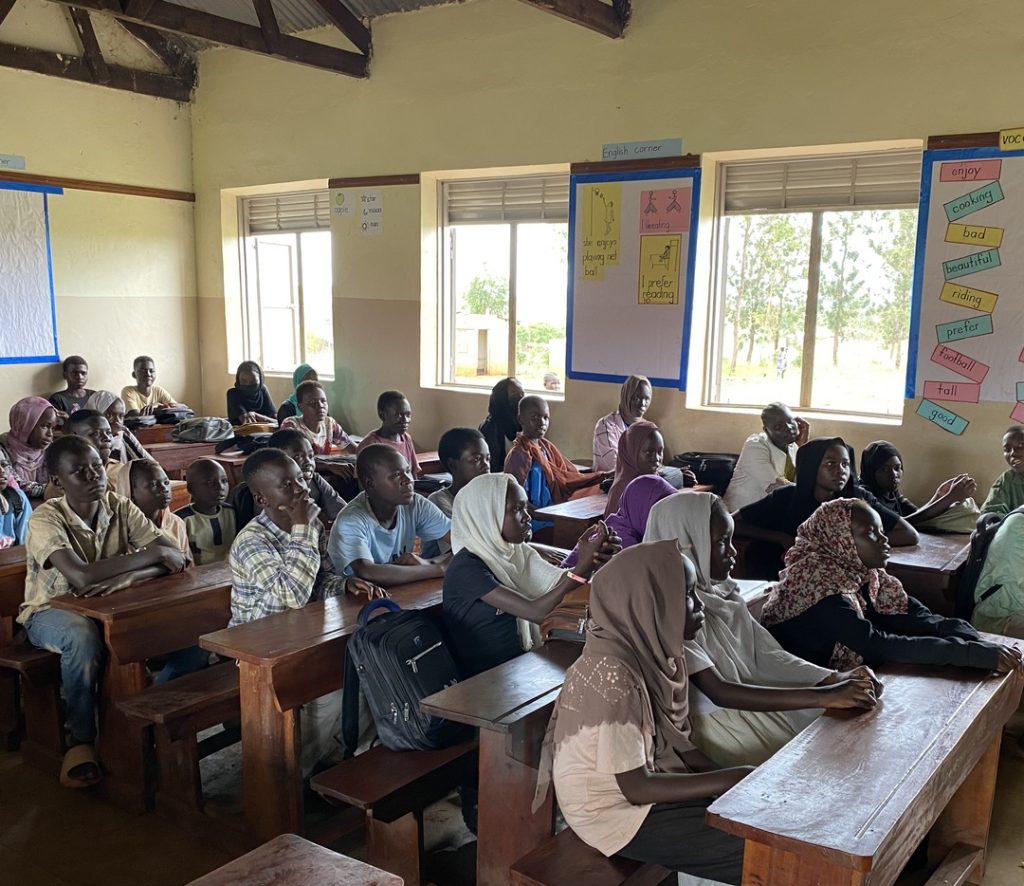
Two dilapidated classroom blocks have been renovated, giving learners a cleaner, safer, and more spacious environment. This has enabled the school to expand class streams and accommodate more students effectively.
“Before the project, some classrooms were unusable and many children stayed home,” says Walter Okwir, a teacher of Integrated Science and Mathematics.
“Now, with renovated blocks, we’ve added new streams and reduced congestion. The change is visible. Learners are coming back,” he added.
As a result, enrolment grew from 3,700 in 2023 to 4,316 learners by the end of 2024.
Bridging language barriers
With many new learners speaking different languages, particularly Sudanese Arabic, language was a key barrier to learning.
“At first, they couldn’t follow lessons,” Walter shares.
“Now, with teaching assistants translating and supporting them, learners are more engaged and confident.”
Cash-for-Education keeping children in school
To reduce dropouts due to poverty, the project introduced cash-for-education support, helping families pay school fees and examination costs.
“Without that support, many would’ve dropped out,” says Walter. “Now they can stay in school and focus on learning.”
“My parents couldn’t afford school fees,” says Dandun, a learner at Canrom. “But the support from ECHO helped me stay in school and sit for my exams. I want to become a teacher one day.”
Equipping teachers to support every child
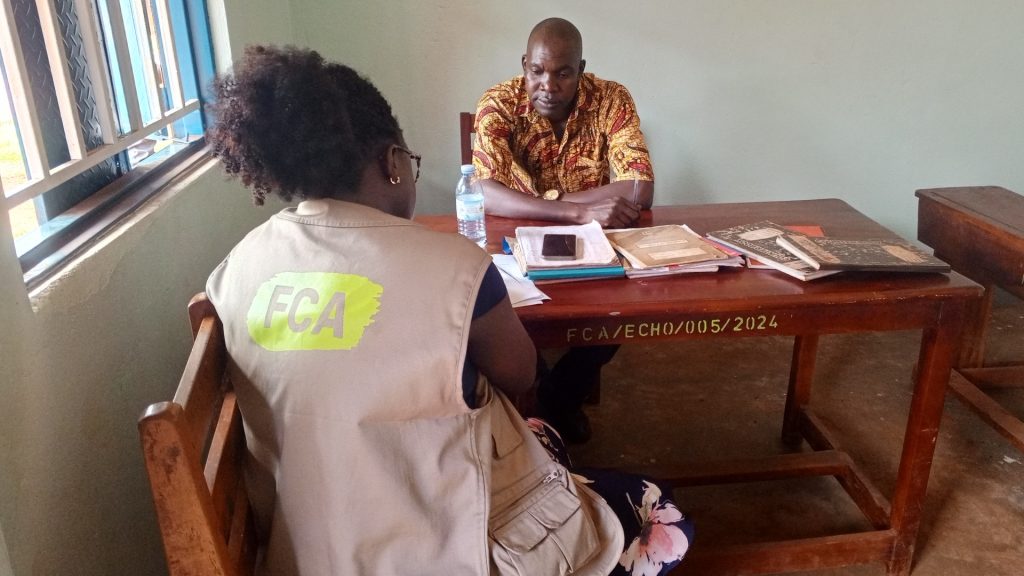
Quality education depends on skilled teachers. The project invested in teacher training on conflict-sensitive education and inclusive teaching methods.
“We now know how to support learners going through trauma,” says Walter. “Personally, I feel better equipped to help every child succeed.”
And the transformation is not only in Kiryandongo. In Palorinya settlement, another school is experiencing similar change.
Empowering learners at Luru Primary School
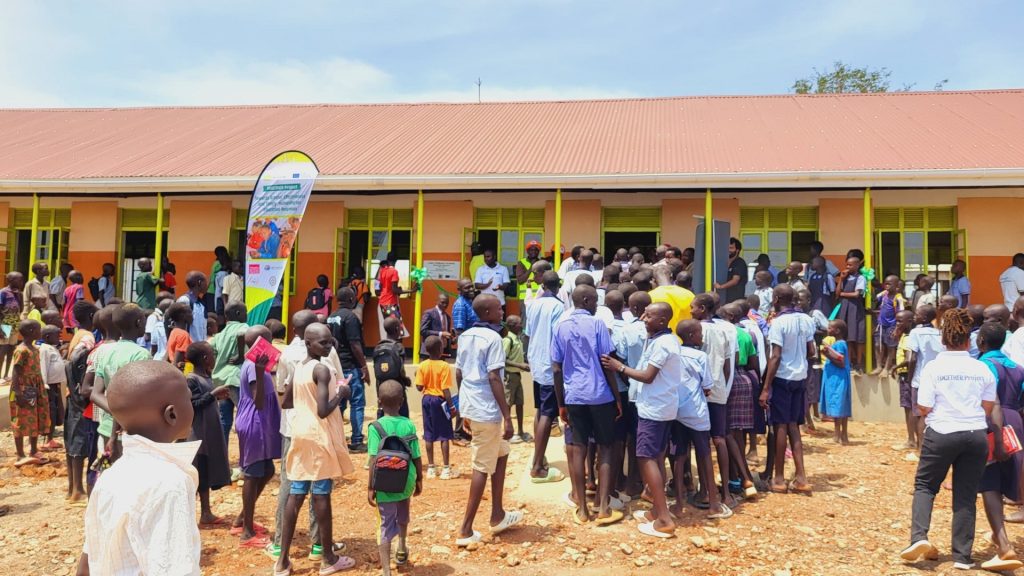
At Luru Primary School, the TOGETHER Project is opening doors for learners who once thought education was out of reach.
“The project helped us build three new classrooms and 10 gender-sensitive latrines, making our school safer and more welcoming,” says Kenyi Edward Yosia, deputy head teacher.
“These changes have given parents the confidence to enroll their children.”
Through the Accelerated Education Programme (AEP), the school has helped 314 over-age children, adolescent girls, teenage mothers, and youth who missed school to return to the classroom.
“The project also helped us recruit new teachers and improve the quality of instruction,” Kenyi notes. “We’ve seen real progress.”
To support learners from vulnerable families, 341 students received cash-for-education support to cover fees and buy scholastic materials.
No one left behind
Menstrual hygiene remains a leading cause of absenteeism for girls. The TOGETHER Project introduced menstrual hygiene kits and awareness sessions.
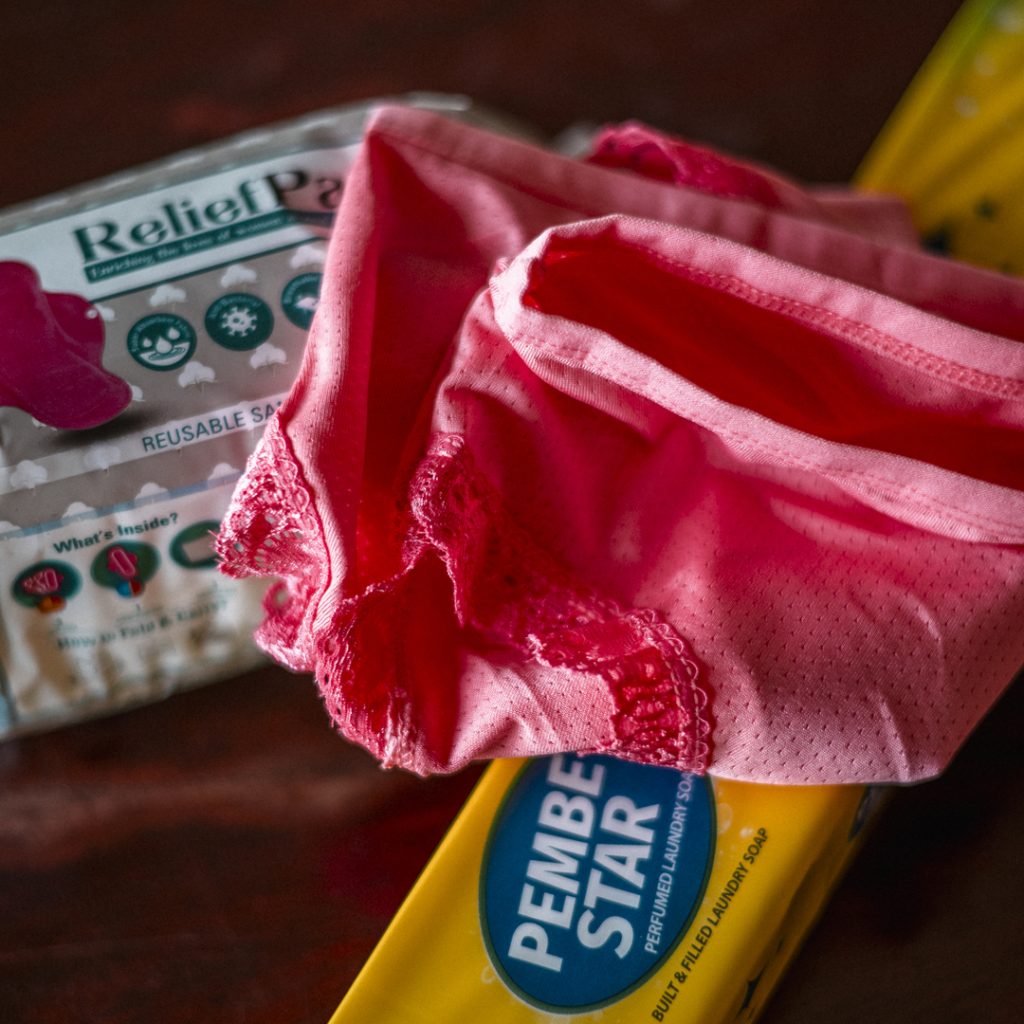
“I used to miss school during my period,” says Grace, a P6 learner.
“Now I feel confident and come to school every day.”
Enrolment increased from 1,616 to 2,312 learners by the end of 2024.
“Girls now feel comfortable and confident, even during their periods,” Kenyi shares.
To help new learners integrate, a language bridging program was introduced, allowing refugee children to catch up and engage more fully in class.
“One learner told me, ‘I no longer feel left out. I can now participate in class discussions,’” Kenyi recalls.
About the TOGETHER Project
The TOGETHER Project, funded by the European Union Humanitarian Aid (ECHO), is led by Finn Church Aid (FCA) in partnership with Cheshire Services (CSU), Hopelink Action Foundation (HAF) Uganda, PALM Corps, and Forum for Education NGOs (FENU). It promotes access to quality, inclusive education for refugee and host community children in Kiryandongo, Palorinya, Rhino Camp, Palabek, and Imvepi settlements.
—
Text: Linda Kabuzire
Cover Image: Björn Udd